Retail media is evolving.
As a channel, it has historically been prized for its ability to sit close to the point of conversion – but the past few years have seen it steadily expand into a proposition that covers the full funnel.
With touchpoints like offsite and in-store addressing more of the customer journey, new creative formats broadening retail media’s capabilities, and approaches to measurement that aim to join the dots between all of it, how can brands, agencies, and retail media networks alike take full advantage of these new capabilities? What are some of the obstacles that still need to be overcome?
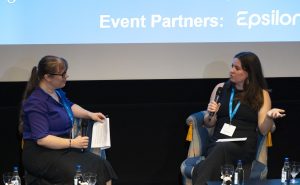
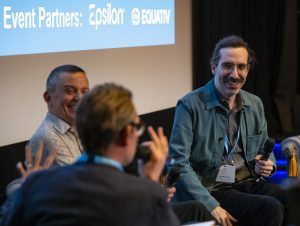
This was the question put before the panel at Retail Media Age’s second London lunch, held in the picturesque venue of Osteria by Bocconcino, Covent Garden. Experts from Harrods, Pearson, WPP Media, Webloyalty and Epsilon weighed in on how to approach the challenges and opportunities of full funnel retail media, connect the dots across touchpoints, and attribute the results.
Know your competitive advantage
Justin Tay, VP Commerce at Epsilon, pointed out that only a small number of retail media networks currently have the combination of scaled first-party data, technological capabilities, measurement, and operational maturity to cover every possible stage of the customer journey.
“It’s a very high bar,” he said. “I challenge the assumption that retail media networks have to do that – not every retailer needs to build a global media business.”
Comparing retail media networks to professional athletes, he pointed out that few athletes are world-class in all disciplines; the trick is in knowing exactly where your own competitive advantage lies.
“The real question isn’t whether every network can cover every stage of the funnel – it’s whether they can seamlessly connect the stages that they do own.”
Lucie Leverton, Head of Partnerships Development at Harrods, described what this kind of connecting the dots looks like for the luxury retailer, explaining that Harrods has spent longer playing at the top of the funnel than the bottom due to luxury’s extensive discovery and consideration phase, with purchases that are frequently emotionally driven.
“So, we spent a really long time working with campaigns where we were able to storytell and build an emotional connection between those brands and the consumer,” she said. “After that, we integrated the tech, which allowed us to provide more lower-funnel strategies.
“What that’s enabled us to do is join up the whole customer journey in a more cohesive way – because we were more thoughtful at the time. It’s a way of approaching a campaign that’s not just selling a product.”
The measurement challenge: Which touchpoint did the work?
As retail media takes in more touchpoints along the customer journey, this increases the challenge of continuous measurement and understanding the role that each has played in contributing to an eventual purchase.
Richard Piper, Business Development Director at Webloyalty, drew a parallel with networking conversations at events like the RMA Lunch and the leads that might come from them.
“Can I attribute those to this particular meeting?” he said. “It might be because I was sat over here – or it might be because we were emailing this person for the last three months. Or we’ll meet at another event. There is no one conversion metric that can be used to measure that.”
Piper’s advice to attendees was, “Go and talk to people who have been dealing with this problem for a long time, see what they’ve found out, and then consider how that might map onto attribution.”
Speaking as someone who is used to connecting different players in the retail media chain in an agency capacity, Yara El Saadani, VP Commerce, EMEA & UK at WPP Media, said that the central question of full funnel retail media is “how we bring it all together”.
“For brands, full funnel is so much more than retail media – so, I think there’s a big conversation to have as an industry about how we lean on other areas of commerce growth, and how we measure that.”
Mrunal Bhagat, Retail Media Lead at Pearson, cautioned against overly relying on last-touch attribution and return on ad spend to track success, particularly in the LLM-driven “recommendation economy”. She likened it to focusing solely on the ball that falls into the pocket in a game of snooker – rather than acknowledging those that were impacted along the way.
“Brands and advertisers don’t normally think through that lens because we don’t have a universally-accepted framework that measures the commercial impact of all of these different touchpoints together,” she said.
Bhagat recommends a combination of customer value, incrementality, and share of model as a mix that helps brands get closer to understanding what led the customer to a purchase.
“Like proposing marriage on a first date”: Why brands mustn’t apply lower-funnel thinking to the upper funnel
“[Offsite is] a very exciting development in retail media that we’ve seen in the last few years,” said Epsilon’s Justin Tay. “Advertisers can use retailers’ first party data across many channels – social, video, CTV – and can influence people earlier in the decision-making process.”
However, a mistake that he sees many brands making is applying lower-funnel thinking to the upper funnel – something that Tay likened to “proposing marriage on a first date”.
“You’re asking for the sale before you’ve begun the relationship. You then proceed to ‘love bomb’ the other party until they lose interest – or they end up reporting you for ‘stalking’. Either way, it never ends well.”
He also highlighted that advertisers should view offsite as an extension of their audience, not performance, strategy – and that they should think about being present where their customers are rather than becoming overly focused on channels.
“I think offsite works best when brands understand the different touchpoints and different jobs that they do,” he concluded. “Sometimes it’s consideration, and sometimes it’s conversion. Ultimately, the smartest advertisers know that every touchpoint doesn’t need to play the same role.”
El Saadani cited a study carried out by WPP Media and Oxford University that found 84% of consumers in a shopping mindset tend to already have a brand in mind – which makes that top-of-funnel influence all the more important.
“There’s such a small window [that] you can influence,” she said. “So, how do we use that opportunity to transform the way consumers think of brands?
“The influencer world is slightly taking over at the moment, and so how we use those touchpoints to maximise the messaging is crucial. The synergy between those worlds is where commerce media can really win in terms of the full funnel.”
Bhagat added, “The thread that moves between [different points in the customer journey] is AI – and we’ve moved from the social economy of the late 2000s to the recommendation economy.
“Consumers are becoming smarter, and they recognise that something is an ad, so they want an unfiltered opinion.”
Bringing in-store “magic” to the rest of the funnel
The potential of in-store for retail media has been receiving increased attention as retailers and advertisers look to reach shoppers in the store space, whether they are browsing and discovering or making a quick purchase.
For Harrods, Leverton reported that in-store is a vital part of the retail experience and customer journey: “It’s our strongest asset. The magic of Harrods is being in the store – experiencing each room, touching the product, and receiving our amazing in-store service. Without it, we wouldn’t be the brand that we are.”
Replicating this very tactile experience across digital touchpoints has been a challenge, but Leverton said that joining up the underlying data has helped Harrods to create a cohesive customer journey: “You’ll see the same beautiful content and messaging across all devices – and we do that by spending time with the brands, using our own expertise and customer knowledge wherever we can to create content that moves seamlessly around different channels.”
Webloyalty’s Richard Piper also spoke to the importance of loyalty in understanding who the customer is when they spend time in-store – and the need for retailers to offer something in exchange for that all-important data, such as rewards or post-purchase benefits. “That’s one of the areas you really need to look at,” he recommended.
“And you will have to give some margin away to achieve that goal in the short term, but for a reasonably small cost, [retailers] can get the data they so value in order to draw everything together.”