Carlsberg, the nearly 180-year-old brewing company founded in Denmark, is transforming its approach to media and advertising.
Like a lot of veteran CPG businesses, the brand is focused on reach, awareness, and efficiencies within media – but is also doubling down on effectiveness, incrementality, and drivers of consumer demand.
Carlsberg has also partnered with rapid delivery platforms Wolt and Deliveroo, owned by US delivery company DoorDash, and uses their ad offering to ensure that Carlsberg’s products are presented to consumers at the moments where they’ll be most responsive.
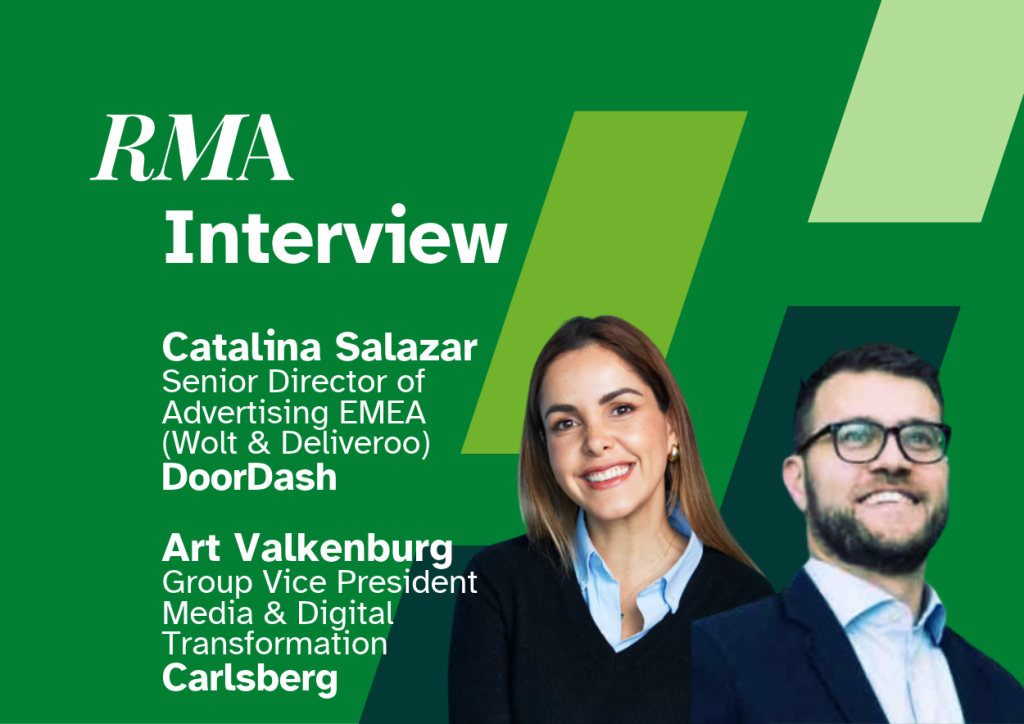
I spoke to Art Valkenburg, Group Vice President Media & Digital Transformation at Carlsberg, and Catalina Salazar, Senior Director of Advertising, EMEA (Wolt & Deliveroo) at DoorDash, in Copenhagen to learn about how Carlsberg’s retail media strategy is shifting away from channels towards occasions and moments; how it tailors its approach to changing consumer behaviour and local markets; and how the business closes the measurement loop on its activities.
From looking at channels to meeting the occasion
“We’re really looking at where we get the most incremental growth – what are the right levers, the right touchpoints within that funnel and within that consumer journey to achieve this?” said Valkenburg.
“As part of that, the biggest switch for us has been to move from channels into occasions – and to take a full-funnel approach to those.”
For example, in partnership with Deliveroo in the UK, Carlsberg has run activations centring on football competitions. “Not only do we get more data on the full path to purchase and transactions, but we were also able to look at category growth and incrementality when it comes to brand choice for Carlsberg,” he said.
“That’s super interesting for us, because that’s data we don’t have ourselves. This is where platforms such as Deliveroo and Wolt offer tremendous opportunities – deeper insights, really good attribution.”
This shift from looking at channels to thinking about occasions and moments also helps Carlsberg respond to shifting consumer behaviour around alcohol consumption. Valkenburg pointed out that younger consumers are shifting towards more moderate alcohol consumption – a pattern that is being seen among some older consumers as well.
In response to this, Carlsberg has diversified its portfolio, producing soft drinks and acquiring Britvic – which owns brands such as J2O and Robinsons – in the UK. “The occasions and consumers are massively changing for us as well,” said Valkenburg.
“It’s not just about how we sell more beer to consumers; it’s about how we become relevant in moments of consumption and occasions in which people consume beverages.”
Global consistency, local relevance
This multi-product portfolio also comes into its own when Carlsberg needs to adapt its approach to different regional markets. Carlsberg is a quintessentially Danish brand but operates globally; I asked Valkenburg how the company manages to replicate this sense of being local in the many markets it operates within.
“The role that the brands in our portfolio play differs from market to market,” he said. China is one of Carlsberg’s biggest markets, and the brand’s offering there is much more premium, with more local players in the brand portfolio. “The way we’re transforming our marketing operating model is focused on global consistency and then local relevance.
“When it comes back to media, for example – how do we ensure that there’s a globally consistent approach to media effectiveness frameworks? Or definitions, or the capabilities that we deploy?
“There’s a high level of local freedom, opportunity, and relevance to how we activate against the occasions, the consumers, and the commercial partnerships that we have. All of that has to stay in-market – but we need to make sure we can measure, track, and improve at a global scale.”
Salazar added, “The consumer doesn’t care that you’re in 40 countries. They have a need right now – and they want it served from their neighbourhood.”
She pointed out that the advantage of a platform like Wolt or Deliveroo is the consistency of experience: the consumer knows exactly what they will get. At the same time, Wolt achieves a localised approach by connecting the customer with nearby retailers or restaurants who can deliver the product.
“We want [brands] to be building creative that is really local; but we want them to deliver an experience beyond impressions and beyond a commercial,” Salazar said in a separate conversation that went deeper into Wolt’s approach to advertising.
“And we want our products to be accessible to everyone because we’re not building a global ecosystem out of just global activations – we’re building a local commerce engine that works on a neighbourhood level.”
Closing the loop
Of course, the golden question amid all of this is whether the brand can then tie its activity back to measurable actions like sales and returns.
Salazar stated that as Wolt owns the transaction data, it’s easy for the platform to understand who is buying, why, and in what way. “We know who we spoke to and what the behaviour was – did they engage with something and end up buying, or did they replace that item? Was that product not available and they chose a competitor? Are they new to brand?
“That’s really rich data that informs effectiveness.”
With that said, Salazar considers tying ad campaigns back to sales to be “table stakes”. “For me, the brands that are really winning in this space are looking at the cohorts of consumers more than the sales of a product. How loyal is this person? Are they coming back after trying a product on a particular occasion?
“Is my share [of market] growing? I think that is much more powerful when you’re building a brand – because it shows you which activities have driven the longest engagement with that consumer through multiple months.”
Valkenburg agreed: “Having closed-loop measurement and linking the activity all the way to sales is fantastic on a campaign level and from a media effectiveness and efficiency point of view.
“But the bigger challenge for us and for many brands in FMCG is the advertiser-level incrementality. Closed-loop measurement shouldn’t be replacing other forms of measurement – they should be complementing and enriching each other.
“Looking at long-term brand building, long-term incremental growth, through the lens of consumers and occasions: that is where we’re going to win.”
Further reading: The 90% problem: Why CPG brands need to rethink what comes after the click