Travel is a significant, often complex purchase, and its customer journey is far from linear. What does this reality mean for the brands – in either the travel, hospitality and leisure spaces, or those adjacent to them – who want to target travel customers?
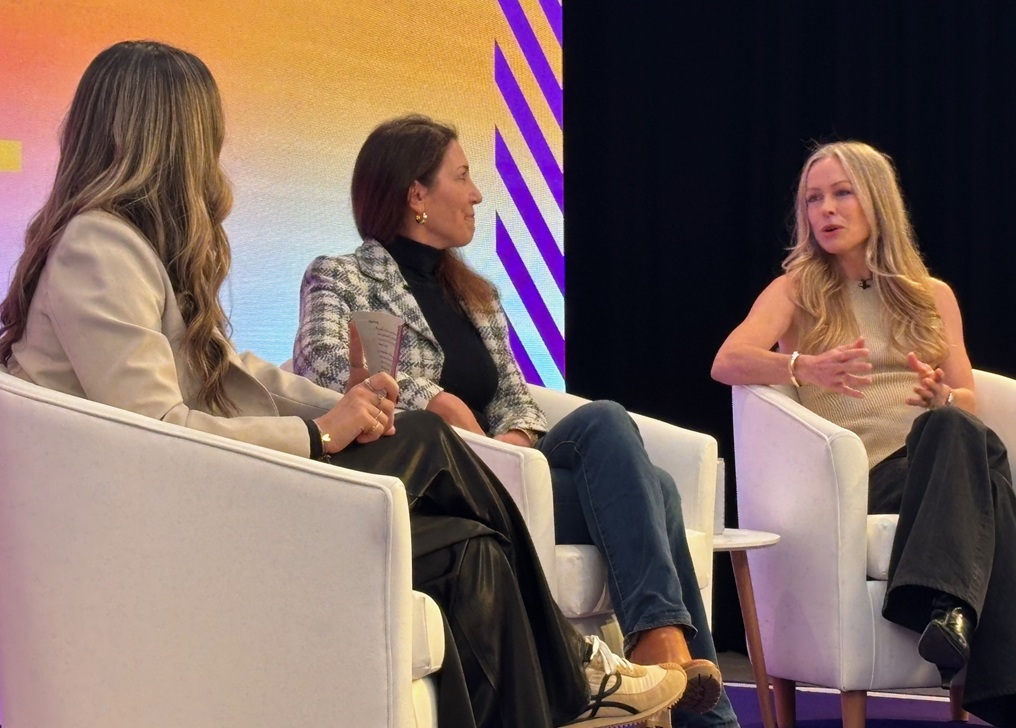
Jennifer Andre, Global VP Business Development at Expedia Group Advertising, and Jessica McGrogan, VP of Growth EMEA at The Trade Desk, sat down with Advertising Week’s Louise Dilulio to explore this question at Advertising Week Europe.
The in-depth conversation touched on the ways that travellers are finding inspiration – including the new trend of ‘set-jetting’, or travel inspired by TV programmes – and how brands can reach them on this fragmented journey and play a part in reducing friction.
The two also discussed the data that can be gleaned from travel research and purchases and why brands across all verticals – not just the ‘obvious’ brands – should be putting themselves in front of these audiences.
“It’s not a simple purchase”: How brands can help consumers rise above the “noise” in travel
Expedia’s Jennifer Andre reflected that while modern travellers are empowered with the content and tools to carry out every part of the booking process online, the process can be overwhelming.
“It’s not linear; it’s a connected universe, ecosystem … [the way that] travellers are getting their inspiration, searching and booking – it’s all over the place.
“We always talk about ‘There is no funnel’ in travel – people are really bouncing around more than ever.”
Additionally, “Whether you’re booking it through traditional ways or online, it’s not a simple purchase – it’s generally an expensive, considered purchase. And so, that path leading up to it is pretty fragmented. You look at the economic uncertainty that’s going on right now … There’s a lot more pressure on travellers to make that trip absolutely perfect.”
This presents both a challenge and an opportunity for marketers looking to reach travellers as they research and book. On the one hand, it can be challenging to understand what is influencing travel customers throughout that journey and what the most important touchpoints are.
On the other, as Andre pointed out, brands can help consumers to navigate that by guiding them along their journey.
“For travel advertisers … we can now tap into our first-party data and say, ‘Hey, we’re going to find you that person that’s getting inspired – whether it’s coming to our platform, or maybe they’re listening to a podcast’ – and we can pair that with a shoppable, personalised experience.
“[So] if you’re a brand, you’re going to build trust with that traveller, because you’ve just helped them cut through all of that clutter.”
According to Expedia’s internal data, on average, travellers consume some 140 pages of digital content as they progress along the funnel from inspiration towards purchase. “That’s a lot of noise for a traveller to have to rise above; so I think the more that brands can be in front of that traveller at the right touchpoints – that’s probably the best way to navigate it.”
One source of inspiration for travellers that holds a great deal of sway is TV shows – a trend that Expedia has dubbed ‘set-jetting’. Andre revealed that one in three travellers is gaining inspiration from a TV programme or film that they’ve watched – in the midst of huge enthusiasm around the series ‘White Lotus’, for example, Expedia saw a spike in searches and bookings for locations connected to the show, such as Sicily and Thailand.
“We are exposed to all kinds of media all the time,” agreed The Trade Desk’s Jessica McGrogan. “It’s great for marketers – but it’s also really difficult.
“The two things you need are the rich dataset … and then you need the platform to plug it into to connect all of those channels in a meaningful way.”
The opportunity presented by travel datasets
Andre remarked that although travellers do take in a lot of different touchpoints along their journey, they come back to online travel agencies repeatedly at various stages – which is valuable in understanding real-time intent signals and building different audience segments.
While the value of this type of audience data is intuitive for businesses like hotels and airlines, a much wider array of brands can benefit from it. As McGrogan explained, “Onsite [commerce media] as this conversion stage of the funnel is a great place to be – but the whole promise of the offsite [proposition] and the partnership that we have together is to get upstream [of the customer journey].
“And so the possibilities are just limitless across all categories.”
McGrogan gave the example of a recent trip she carried out to Chamonix in the French Alps. “I wasn’t just booking the hotel and the flight – I was looking at high-end skincare and SPF; I might be in-market for insurance or financial services.
“I think there’s a lot that you can glean from travel data. It’s really high-intent data and can be a marker or a signal for future purchases in a myriad of categories.
“And so, I think it’s really relevant especially when you’re taking it offsite – you’re taking it upstream and up-funnel.”
Andre noted that advertisers don’t always consider Expedia a source for potential customers in the same way that they might a travel magazine or an airport ad placement. “And that’s based on demographic assumptions or maybe geographic assumptions.
“When you travel, there’s so many products that you need to have – and if the advertiser is showing up at that right moment when someone has just booked a beach vacation and they’re going to need sunscreen or a swimsuit; that’s really helpful.
“…I think what’s less obvious, but a critical point, is that we don’t just have high-value travellers – we have high-value consumers.”