“We need to be where our customers are … As customers discover products in different ways, [we want to make sure] that Boohoo is visible at the forefront of that.”
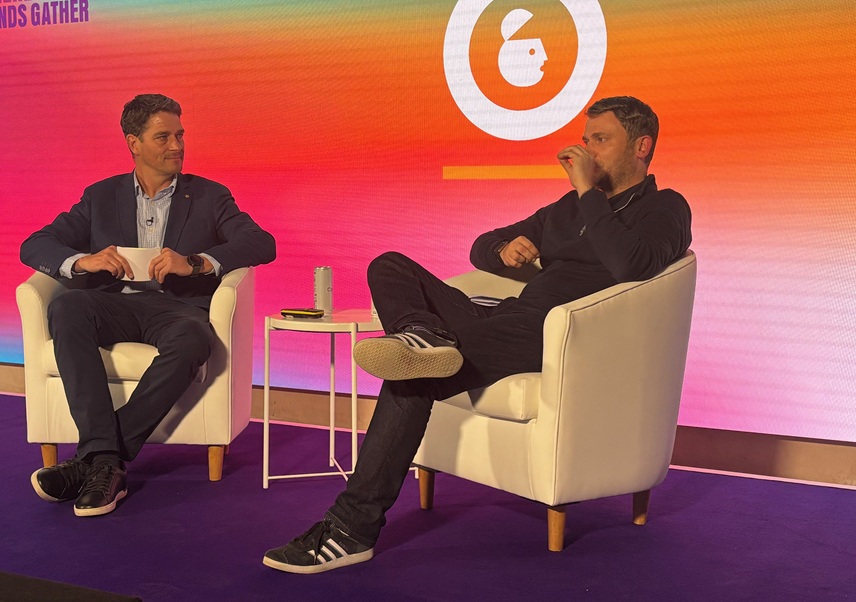
Tom Binns, Managing Director at Boohoo.com, made this point in a fireside conversation with Henry Stokes, Senior Director at PayPal Ads.
Binns and Stokes were speaking at Advertising Week Europe, where Binns unpacked Boohoo’s strategy for leaning into changes in how customers discover and shop for clothing online, including with the introduction of shoppable ad formats. He explained how the fashion retailer is balancing the risks and opportunities that come from reducing friction and collapsing the shopping funnel; as well as how it plans to track whether the new format is delivering against campaign goals.
The evolution of outfit shopping online
Binns highlighted that the way customers search for and find clothing products online is changing – instead of conducting searches for a specific item like a black dress, customers might search for a “summer outfit” or set out to “build a wardrobe for spring break”.
“I think that’s where customers will be more into the AI approach – because it’s going to give them those richer results,” he said. “If we’re not in that conversation – in those models – we’re going to be behind competitors in that space.”
These types of searches are often time-sensitive – in the spring break example, the shopper might have a holiday booked that they’re planning for – and so Boohoo has set out to make the path to purchase as quick and frictionless as possible with smart recommendations and instant shoppability.
“[Customers] are time-poor and they’re being served lots of content every day – so that ability to see relevant products that they like; click there and then, make the payment, we take that order… It’s not something that we’ve seen in the market so far.”
The opportunities and risks of a collapsed shopping funnel
One of the ways that Boohoo is hoping to cater to these new moments of opportunity is through shoppable ads – specifically PayPal’s Storefront Ads format, which presents shoppers with a convenient ‘Buy with PayPal’ button within an ad. Binns noted that this deliberate collapsing of the funnel has its advantages but also its risks.
“Taking the friction away from the customer in the shopping journey is definitely an opportunity – giving customers the ability to shop through a medium, and a channel, that they’ve never been able to shop before is definitely an opportunity.”
At the same time, “What we need to understand is – what’s the impact on our average order value? What’s the potential impact on returns rates with customers making a more impulsive decision to buy directly there and then within an ad?”
While there is a degree of flexibility within the shoppable ads in terms of colour options and sizing, said Binns, the retailer necessarily needs to present a streamlined range of choices to the customer in order to take advantage of the format. “To make that process work – it’s still going to be quite tight in terms of what the customer can see.”
In other words, this could potentially lead to customers not finding their preferred option or potentially impulse buying an item that’s not quite right.
But even if customers don’t shop directly within the ad, “it’s still a compelling ad to draw the customer in [and] potentially bring them through to the website to shop.”
Tracking success with a view to scale
In the United States, Boohoo and PayPal are running a spring break-themed campaign that will see shoppers targeted with the new interactive ads.
Binns reflected that to gauge success, Boohoo will be looking at ROAS, but also a range of other metrics to help track how this very innovative type of campaign tends to perform.
“[We’ll be] looking at impressions – how does the customer engage in terms of click-through rate? Are there particular products or categories that resonate better in a format like this?”
He added that Boohoo will be tracking the impact to order frequency – “by serving customers potentially multiple ads with different products, are we getting them to engage multiple times?
“It’s really just going to be – because this is a different way of serving the customer, [seeing] how she engages with it – and ultimately, once we know that … how do we optimise the experience and evolve it for the customer?”
A key goal for Boohoo is incremental growth with new audiences, and so the retailer will also be tracking how many customers it has reached who are new to the brand.
“If we go out there and engage customers who’ve never interacted with the brand before, having a lower AOV from that initial purchase is potentially worthwhile to us if we can then go on to secure second, third, fourth, fifth purchases.
“Getting them engaged with the brand, shopping with the brand, is one of the key objectives of a campaign like this.”
Binns also noted that Boohoo is working on integrations with large language models like Perplexity and Copilot “to make sure that we’ve got as much reach across that space as possible”.
Other than this, Boohoo’s team will be assessing the effectiveness of its initial shoppable ads campaign with a view to potentially bringing similar formats to Boohoo UK and sibling brand Debenhams.
“The key for me is – let’s see this initial campaign play out, understand the learnings from it – and [assess] how we scale these campaigns moving forward; both in the US and also in other markets in which we operate the brand.”
Read more of Retail Media Age’s coverage from Advertising Week Europe.