Earlier this month, home improvement and DIY retailer Wickes announced a major foray into the retail media space with the launch of the Wickes Connected Retail Media network, in partnership with Epsilon.
The launch announcements revealed that Wickes’ network would have onsite/offsite capabilities from the word ‘go’, as well as being underpinned by the retailer’s 230-strong physical store estate (which it has just revealed ambitions to grow further). The aim is for the new proposition to open up tailored opportunities for brands to connect with an audience of home improvement customers, trade professionals and design and installation specialists.
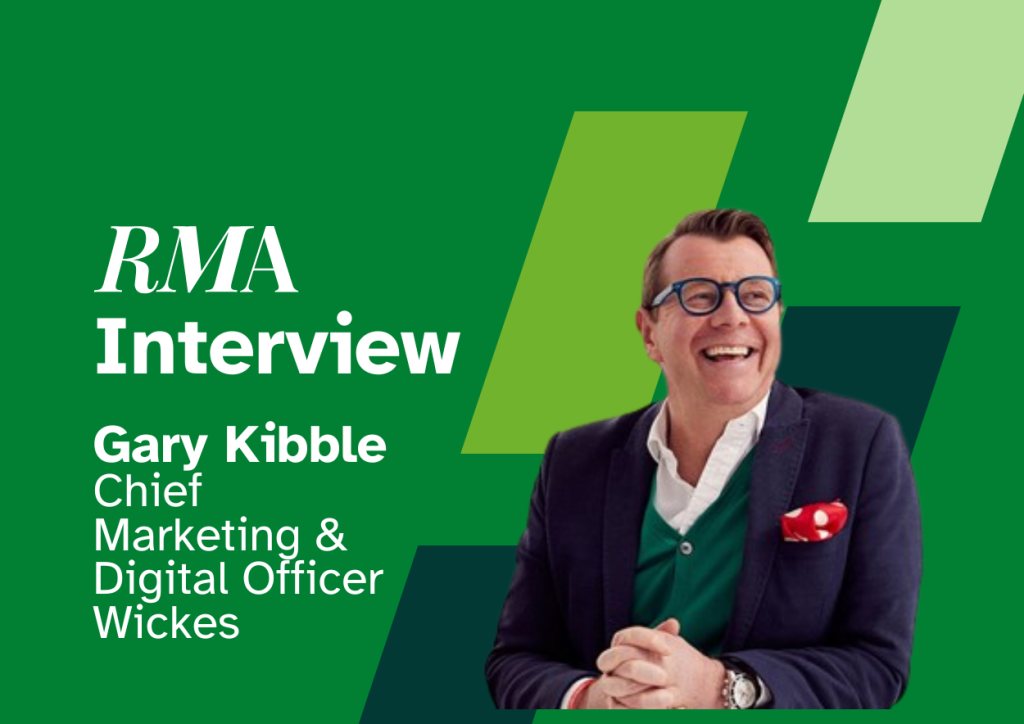
To find out more about the launch and Wickes’ plans in the retail media space, Retail Media Age sat down with Chief Marketing & Digital Officer Gary Kibble. Kibble has a wealth of experience in transformation, marketing, and customer-centric roles, having held leadership positions at The Very Group, Mothercare, and Argos to name but a few. He spoke about the role retail media can play in bridging the gap between idea and reality in home improvement; why being present across the DIY customer journey is absolutely key; and how Wickes is leaning into the strengths of its physical stores.
With this recent launch, Wickes is making a significant move into the retail media space – what do you see as the key opportunities for a home improvement brand such as Wickes in retail media?
I’ve been at Wickes for six and a half years, and more than any other brand that I’ve been fortunate to be a part of, the one thing that rings loud and true in every conversation I listen to with customers is the need for a retailer that can ‘bridge the gap’ between idea and reality.
Customers want a brand where they can have a bit of a deeper relationship than a conventional buyer-seller relationship; they want that deep connection. They want to engage with a brand that better understands them and their needs, that looks at their intent.
I’ve heard that more consistently within home improvement retail than I’ve heard it in my 25 years in fashion retail, food retail, and FMCG retail – so, the question is, how can a retailer brand build deeper connections with customers?
What made you choose now to launch the Wickes retail media network?
The way we describe Wickes’ mission, which we’ve been working on for the last few years, is all around ‘Uniting the doers’.
We have an equally-balanced business, which is one-third trade, one-third DIY and one-third installation of kitchens, bathrooms, and solar projects; to that extent, we are extremely unique. Customers have told us that we have a unique ecosystem – so that’s one driving force, for want of a better description.
Connected to that, customers are very clear with us that they want help, advice and guidance on how they bridge that idea-to-reality gap – they want a retailer as a partner who can hold their hand on the path to purchase.
In my experience of retail media – which goes back for probably the best part of 15 years – the retail media networks that I’ve worked either in or with are really there to guide, help, and support customers. So, not to disrupt the journey in a negative way, but to make sure it’s an accretive experience for the customer.
This came together with us clarifying our mission. There was also a market opportunity – we haven’t seen anyone else within our vertical doing this, from an onsite/offsite perspective, using the unique elements of Epsilon’s COREid.
Why were the onsite/offsite capabilities so important for you to build into the proposition?
It’s partly driven by research, whether empirical evidence or customer anecdotes; we run what we call a ‘customer closeness’ programme with a heartbeat of customer conversations on a monthly basis, and we also run something called ‘Mood of the Nation’ where we talk to our trade and our DIY audience every month.
One of the things you can start to see coming through is the important role that social channels have at the beginning of these journeys. Home improvement projects tend to start with a degree of inspiration; consumers don’t go straight onto a retailer’s website and think, ‘I want to do a panelling project’. They build a Pinterest board; they might go to YouTube to look for a how-to; they might go to TikTok to look for some hacks.
They’re coming upstream from a retailer website – so, they’re operating outside of the retailer’s ecosystem. And if you can win the share of voice there, then you get a degree of preference as a brand when customers are ready to start embarking on the customer journey.
You also have to be able to come outside of your own ecosystem [when embarking on measurement and attribution] to look at the full-funnel customer journey. If, as an example, we ran a very tight attribution window, and said, ‘Well, once someone is on our site, how are they interacting?’ – [we’d be] missing such a huge part of that experience.
This is a broader marketeers’ comment as much as it is a retail media comment, but the only way by which a retail media network survives is by being able to demonstrate with empirical evidence to your investment partners – brands, suppliers – that every pound they spend gives them an adequate level of return on investment.
From a retailer perspective, moreover, what I’m really passionate about is making sure we give the best possible experience for customers – I’m very clear that this isn’t a question of ‘Whoever pays the most gets the best real estate’. We start from a customer-first lens with our proposition.
What we’re trying to do is make the customer’s life easier on their path to purchase by connecting with them upstream so we know the mission they’re on when they come into our ecosystem – and then we can present the right products to ensure they can successfully complete their home improvement mission.
Wickes has a number of brick and mortar retail outlets (more than 200 in total) – how do you feel that this sets you apart as a retailer, and how do they play into the retail media proposition?
Covid starved us of lots of things, and one of the things it starved us of is the ability to have that physical interaction, that engagement; to share advice, recommendation, build relationships. On the back of that, we’ve built something called the ‘Home Improvers’ Community’ – we’re building local communities of tradespeople, design and installation customers, design consultants, our colleagues and our brand partners, who come together and we run events.
In those events, all of those parties build social content for us, which is naturally posted through the appropriate channels – so it builds this flywheel. It’s one of the many reasons that stores are so important to us – this incredible opportunity we have to bring people together through our physical spaces.
The physical store estate is one of the things we have that’s a point of competitive advantage in the business we’re in now. If you try and take on an Amazon (or any online pureplayer) in the thing they’re absolutely brilliant at – last-mile fulfillment, small box – you’ll probably get a bloody nose. But if you say “Where are we different?” and focus your energy there – that’s where you can really create a point of advantage.
In addition to the Wickes Connected Retail Media network that we’ve just launched in partnership with Epsilon, we’ve been running a retail media network for about the past year where we have something that we call our bespoke sell. Which is a bit more of a ‘white glove’ service for the launch of bigger campaigns – not only online experiences but physical store experiences like point of sale, in-store events, and so on and so forth.
So far, every brand that’s taken a retail media campaign with us has come back for another one – which says to me that retail media works in the home improvement space, and I have no doubt that the partnership with Epsilon is going to accelerate that. We’re coming from a really confident, but not arrogant, place.
Read more interviews with leaders in retail media on Retail Media Age.