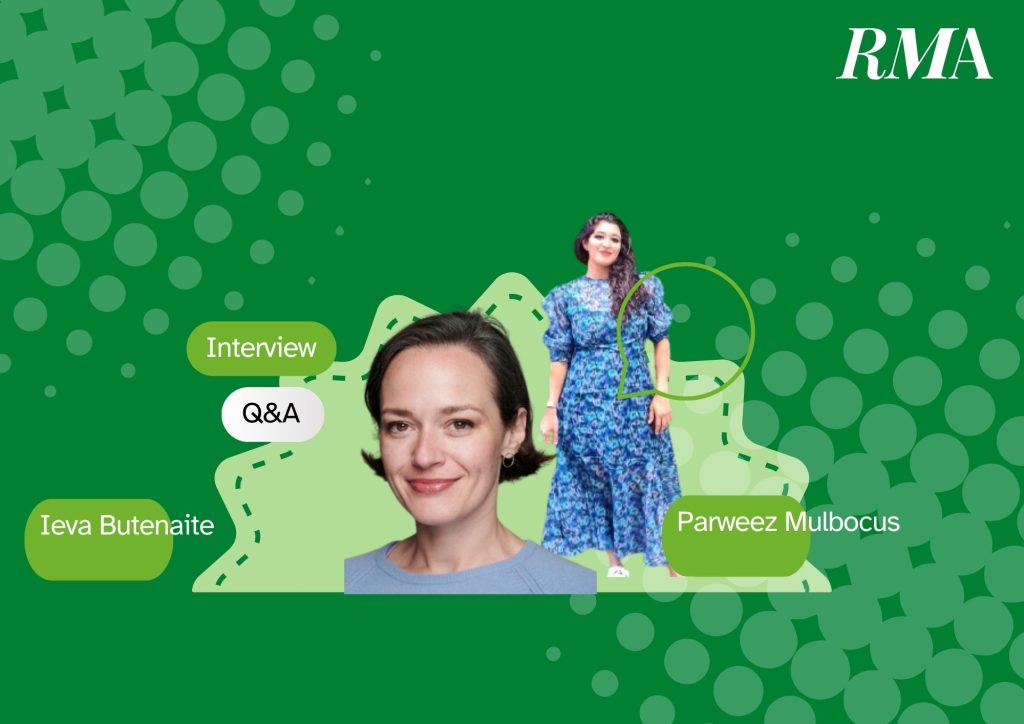
Retail media has moved rapidly from experimentation to operational reality. As budgets grow and expectations mature, agencies are increasingly being asked to bring order, integration and long-term thinking to a fast-evolving ecosystem. In this interview, Retail Media Age Editor-in-Chief Justin Pearse speaks to Ieva Butenaite, Executive Director, Retail Media at OMD, and Parweez Mulbocus, Head of eCommerce at OMD, about standardisation, organisational change, talent and the growing importance of creativity.
From growth to governance
How has OMD’s retail media capability evolved in recent years?
Ieva Butenaite said that OMD’s retail media work sits within a broader commerce community across Omnicom, bringing together teams from multiple agencies and regions. She currently works as global retail media and commerce strategy lead for Philips, defining best practice and global roadmaps, then cascading those into regional markets while feeding challenges back up to a global level.
“For us, retail media has to sit within connected commerce,” she says. “We are not just looking at activation, we are looking at transformation, operating models and future-proofing.”
What changes most between 2025 and 2026?
What are the biggest shifts you are seeing this year compared with last?
Butenaite believes the industry is moving from enthusiasm to discipline. “Everyone jumped on retail media and commerce, and now there is a real need for standardisation, level setting and alignment. It is not glamorous work, but it is essential if you want to scale properly.”
She also points to AI as a major trend, but warns against treating it as a buzzword. “AI needs to be blended into existing commerce practices. You cannot just label everything AI in the same way everything suddenly became retail media.”
Mulbocus agrees, adding that leadership structures are changing. “Retail media used to be very locally driven. Now global and regional leadership have much more influence, because brands are seeing the impact of consistency and shared frameworks.”
Breaking down silos
Why is integration still such a challenge for brands?
According to Mulbocus, one of the biggest barriers is the absence of a senior champion. “If you do not have someone at the top driving full-funnel thinking, progress is very slow. Where we do see that leadership, the impact is huge.”
Data is another obstacle. Legacy structures often prevent brands from using data effectively, leading to gut-driven decisions rather than evidence-based ones. “You cannot do full-funnel retail media properly if the data foundations are not there,” he says.
Butenaite highlights the cultural gap between teams. “Sales teams, key account managers and marketing teams speak very different languages. Before you can do anything sophisticated, you need everyone working from the same cheat sheet and towards the same goal.”
New roles, new titles
Are new job roles helping to solve these problems?
Mulbocus says yes, but with caveats. She points to integration directors and heads of integrated media as particularly effective. “It can take years to get there, but once everyone understands each other’s language, the results are transformational. The focus shifts from departmental problems to business problems.”
She also notes changes at C-suite level. “We are seeing CMOs becoming chief growth officers, and heads of media becoming heads of integrated media. Retail media increasingly sits within the CMO remit because it is full funnel, but commerce overall still needs to stay closely tied to sales.”
Ecommerce versus retail media
Is there still tension between ecommerce and retail media teams?
Mulbocus is clear that the distinction matters. “Ecommerce is a business unit, not a marketing channel. Retail media is a marketing channel of ecommerce. When you frame it like that, a lot of the confusion disappears.”
Butenaite adds that OMD’s strength comes from blending backgrounds. “I come from a traditional media background, others come from deep ecommerce. Retail media sits between those worlds, and that combination is exactly what clients need.”
Talent and skills
What kind of people are agencies looking for now?
Building teams has required a deliberate mix, Mulbocus explains. “You need core commerce people who really understand how the machine works, otherwise you cannot change mindsets. Then you need planners and integrators who can connect retail media into broader media plans.”
Stakeholder management is critical too. “You are selling ideas internally all the time, across multiple departments. That commercial skill set is essential.”
Retailers and transparency
How are retailers changing as retail media matures?
Butenaite has seen significant progress. “Three or four years ago it was very much a black box. You gave retailers a budget and hoped for a sales uplift. Now we are pushing for self-serve access, customised audiences and real transparency.”
However, progress is uneven. Some markets remain far behind, often due to the scale of infrastructure investment required. “It is a long journey, but agencies and clients are increasingly aligned in demanding better standards.”
Creativity finally enters the picture
Is retail media becoming more creative?
Both agree the answer is yes. Mulbocus argues that standardisation has created space for innovation. “Now that people understand what retail media is, there is room for creativity in campaigns and assets. AI will accelerate that.”
Butenaite sees creativity extending beyond formats. “Creativity is in planning, audience strategy and journey design, not just assets. Retail media and AI together will be defining themes over the next few years.”
As retail media grows up, it is clear that integration, governance and creativity will define the winners, and agencies are increasingly expected to lead that charge