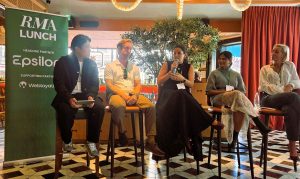
Retail Media Age’s first industry lunch, brought together senior leaders from retail, media, agencies and technology to assess where retail media stands today and what must come next. Hosted by Justin Pearse, editor in chief of Retail Media Age, the event reflected the growing confidence of a channel that has moved rapidly from experimentation to expectation.
The lunch, supported by headline partner Moloco and supporting partner Mantis, opened with Jason Wescott, Global Head of Commerce Solutions at WPP Media, who explained why he joined the Retail Media Age advisory board.
“Retail media is about community and connection,” he said. “What’s exciting is that commerce and retail media already feels like a community, where media, retail and technology genuinely come together.” That sense of shared purpose, he argued, is what sets the sector apart from more siloed areas of advertising.
Wescott also highlighted the commercial clarity retail media offers.
“CMOs love us, and CFOs love us as well, because we can show return on investment,” he said. According to Wescott, the ability to connect media directly to sales outcomes is driving rapid global growth and increasing senior level engagement.
He added that Retail Media Age has an important role to play in broadening industry voices. “I love seeing articles from people I haven’t heard from before, with their unique perspective. After today, hopefully we won’t be strangers anymore.”
Defining retail media in a fast moving market
The panel discussion that followed brought together Elton Ollerhead, Director at ASOS Media Group; Nadine Warren, Deputy Controller of Advanced Advertising, ITV; Kim Ludlow, Europe Lead for Retail and Commerce Media at Moloco; and Ieva Butenaite, Executive Director of Retail Media at OMD. Asked to characterise the sector, panellists used words such as creativity, evolving and connection, reflecting both momentum and complexity.
Warren argued that retail media’s foundations lie in customer centricity. “Retailers have really put the pipes in place for first-party monetisation,” she said. “What excites me is the ability to understand the journey better, rather than falling into the culture of last click attribution that we all roll our eyes at.”
For Warren, retail media offers a chance to understand how multiple touchpoints influence purchasing decisions, rather than oversimplifying impact.
Ludlow agreed that retail media remains grounded in outcomes. “It’s still all about actionable data connected to sales,” she said, while acknowledging that attribution remains a challenge. “Understanding omnichannel behaviour is where we’re heading, but there’s no right answer yet. We’re on a journey.”
That sense of progression, rather than perfection, was a recurring theme throughout the discussion.
Butenaite suggested that the speed of development varies widely across advertisers. “Some clients are ready for the Ferrari, others are still on a bicycle,” she said. “We need scalable solutions that work for different maturity levels.” In her view, the industry must support both advanced advertisers seeking sophisticated measurement and those still integrating retail media into broader planning.
Ollerhead added that maturity gaps also exist by category. “CPGs and grocers are highly advanced, with sophisticated targeting and measurement,” he said. “In fashion, even big global brands have needed to make significant progress over the past four years, there’s been a lot of education to do, internally and externally.”
Standards, silos and education
A lack of standardisation emerged as a major barrier to growth. Butenaite argued that the industry needs a shared language.
“If we bring industry standards, it becomes much easier to level everyone up,” she said. “Ten years ago, we talked about spots. Now everyone understands impressions. Retail media needs a similar moment.”
Ollerhead highlighted internal alignment as equally important. “Buying teams need to feel that media is supporting their objectives, not working against them,” he said. “If KPIs aren’t aligned, retail media can get blocked before it’s even had a chance.”
Warren echoed this from a broadcaster perspective, noting that traditional buyers are often brought into retail media conversations late. “It can feel like piecing things together at the last minute,” she said, stressing the need for more joined up planning.
Creativity and the customer experience
As the discussion turned to creativity, panellists agreed that retail media is moving beyond functional placements.
Ludlow described a shift towards relevance and personalisation. “We can now deliver the right message to the right customer at the right time,” she said. “That changes retail media from a transaction into an experience.”
Ollerhead pointed to strong demand from brands for social and experiential activity. “There’s huge appetite for creativity, especially around social and real world events,” he said, while acknowledging the commercial balancing act retailers face. “You’ve got brands chasing reach and CFOs chasing margin.”
Butenaite said that offsite media offers scale without internal friction. “This is where inventory becomes endless,” she said. “You can be creative, precise and feel good about the data, while giving consumers a more relevant experience.”
People and skills for the next phase
The final theme was talent. Ollerhead highlighted a shortage of adtech expertise within retailers.
“Even with hundreds of engineers, media technology knowledge can be thin,” he said. Ludlow added that retail media increasingly requires deep collaboration with technical teams. “This is no longer just a media play,” she said. “Technology and data knowledge are critical.”
Supported by headline partner Moloco and supporting partner Mantis, the inaugural Retail Media Age lunch underscored both the progress retail media has made and the work still ahead. As Pearse noted on the day, the sector’s next phase will depend on continued collaboration, shared standards and a willingness to keep learning together.