Following the big news of her addition to the Retail Media Age (RMA) team, Ellie Edwards-Scott, RMA’s Associate Publisher, explores every facet of the world of retail media and why it’s so exciting as part of a new 10-part weekly report series.
Retail media has rapidly evolved from a niche tactic into one of the most transformative forces in advertising. For brands, retailers, and agencies, it represents a new frontier where commerce, content, and data collide. As the first article in our editorial series, we unpack what retail media actually is, how it differs from ecommerce advertising, and why it matters now more than ever.
What is retail media?
Retail media refers to advertising that appears on, or is enabled by, a retailer’s owned and operated assets. This includes websites, mobile apps, in-store screens, email marketing, loyalty programs, and even off-site environments like connected TV and social media, where retailer first-party data is used to target ads.
It is not restricted to online or ecommerce-only environments. Retail media encompasses physical and digital channels, bridging branding and performance goals. Examples include:
- Sponsored product ads on Tesco.com
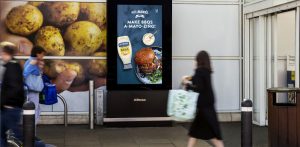
- Digital signage inside Sainsbury’s stores
- Off-site programmatic ads using Boots’ first-party shopper data
This broad scope allows retail media to deliver brand messaging throughout the customer journey, from awareness to conversion, while leveraging closed-loop measurement.
The power of first-party data
At the heart of retail media’s appeal is its access to high-quality, privacy-compliant first-party data. Retailers sit on a goldmine of purchase history, loyalty card behaviour, in-store and online interactions, and more. This enables precise targeting and performance attribution that few other channels can rival.
With third-party cookies fading into obsolescence, retail media networks (RMNs) offer a vital alternative. Even with recent shifts like Google’s deprecation delay, the industry has already embraced the move to first-party data and is investing heavily in the space.
Retail media vs. ecommerce advertising
While they are often conflated, retail media and ecommerce advertising serve distinct functions. Ecommerce advertising typically refers to ad placements that support or appear within transactional ecommerce environments — think Google Shopping or Amazon product listings.
It is lower-funnel, purely digital, and focused on driving direct sales. Retail media, by contrast, is broader in both format and function. It blends awareness, consideration, and conversion, and appears across online and offline environments.
This full-funnel capability is what makes retail media particularly compelling to marketers who want both performance and brand-building outcomes from the same channel.
A new marketing channel takes center stage
According to IAB UK’s Futurescape Barometer, UK digital retail media is projected to reach £8.6 billion by 2030, growing 17% annually. This meteoric growth puts it on track to rival, and potentially surpass, some traditional digital ad channels.
The reason for this growth? Retail media delivers results. Brands are drawn to its ability to deliver measurable ROI through formats like sponsored products, while also experimenting with upper-funnel solutions including video and social integrations. Retailers, for their part, are motivated by declining margins and the need to monetise digital and physical shelf space.
The rise of Retail Media Networks (RMNs)
To formalise these capabilities, many retailers have launched dedicated RMNs. These networks serve as platforms that combine media inventory with proprietary data, analytics, and ad tech infrastructure. In the UK, familiar names like Tesco Media & Insight, Sainsbury’s Nectar360, and Boots Media Group are among the most developed.
These RMNs are increasingly functioning like full-service media businesses, offering targeting, measurement, and creative solutions, both on-site and off-site. Some, like Tesco, are even partnering with media holding companies and programmatic platforms to offer advanced targeting and data clean room solutions.
Bridging digital and physical retail
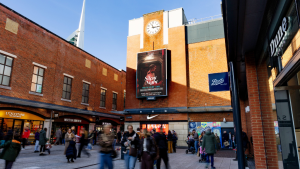
One of the most exciting developments in retail media is its ability to unify online and offline experiences. In-store screens, point-of-sale promotions, and digital shelf technologies are transforming bricks-and-mortar locations into addressable media environments.
This omnichannel approach is unique to retail media and allows marketers to reach consumers at multiple touchpoints, all linked back to a single data spine. As such, retail media is not just about ecommerce growth, but about enhancing the entire path to purchase.
Why it matters now
Retail media sits at the intersection of multiple macro trends — the collapse of third-party cookies, rising demand for performance marketing, the digitisation of physical retail, and the shift to omnichannel commerce. It’s no longer a supplementary tactic but a core component of the modern marketing mix.
For brands, it offers data-rich targeting, closed-loop measurement, and high ROI. For retailers, it opens up lucrative new revenue streams and strengthens customer relationships. For agencies and tech platforms, it presents fresh opportunities to innovate and lead.
As we dive deeper into this series, we’ll explore the dynamics shaping the UK retail media market, examine the key players, and offer insights on where it’s all heading next. But for now, one thing is clear — retail media isn’t the future. It’s already here.