It’s already abundantly clear that the future of digital advertising will centre around retail media, but several questions still remain over what this future will ultimately look like and what steps have to be taken for the industry to find the most success.
One group that’s going to have a significant role to play in how the retail media opportunity presents itself in the coming years is brands. As such, those brands aren’t quite so sure about IAB UK’s recent prediction that all media is set to become retail media by 2030.
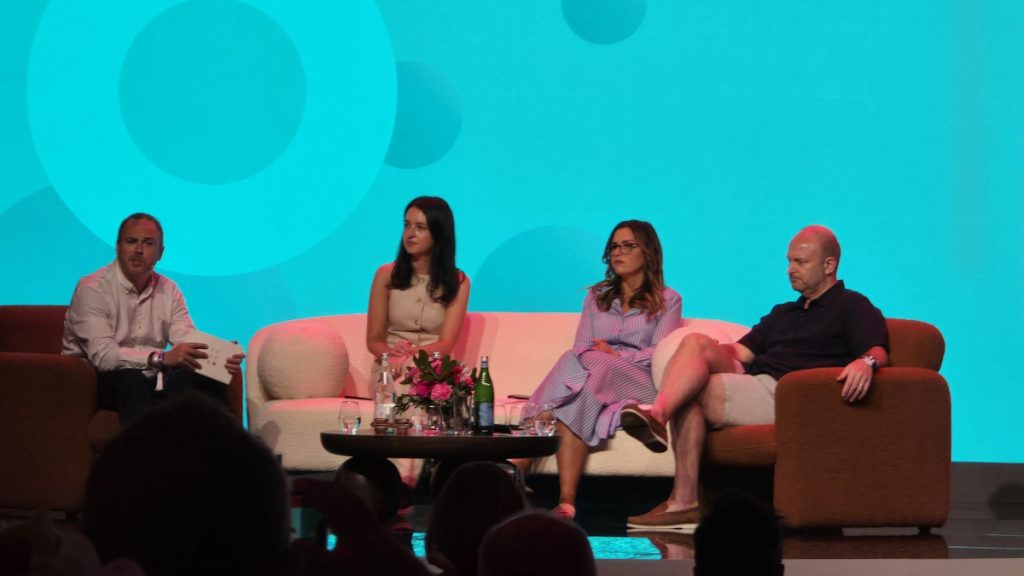
“It’s very clear this world is going to accelerate fast. It’s going to have increasingly sophisticated solutions, but also increasing expectations, both on measurement and performance,” said Tom Priestman, Director of Client Services at Nectar360, opening a brand-focused panel at Cannes Lions. “[On the prediction] I think it’s going to be the brands that get to decide on that vision.”
Having seen Unilever double its investment in retail media over the last two years, Charlotte Murphy, Head of Digital Retail Media at Unilever UK, is in agreement that the “brands will decide,” but also sees the retailer having a significant role to play.
“[The role of brands is] influenced by the level of sophistication in market for retailers,” Murphy explained. “I would say the retailers have a key role to play in shaping the future of media. But do I personally think all media will be retail media by 2030? Not entirely. But it will be everywhere.”
Whether all media does become retail media by 2030 or not, the most important thing from Emma Magliocchi’s, Head of Media at Nestlé, point of view is that retail media is “at the heart of your marketing strategy.”
“I think that we need to take the data that’s available and be able to use that in the customer journey and all of the different touchpoints,” she added. “It’s that vital component to the rest of your media plan, and it’s key for brands.”
So, what does the future hold?
Alongside retailers, agencies, and other partners, these brands are currently in the midst of shaping the future of retail media, but what comes after that? What does the future’s future look like?
Rob Edwards, Head of Media and Digital at Arla, believes – wherever retail media is heading – brands should ensure they continue with a “mission, moment, measurement” approach.
“I think, from where we are, measurement will accelerate. The powers of measurement will change dramatically,” said Edwards. “How do we measure external experiences, and still have the foundation for campaign performance?
“When you’re talking about in-store and out-of-store, you need to understand that brand love and loyalty. How do we start to measure return on experience?
“Humans are visual,” he continued. “We get excited by things we see. So, let’s see more of that theatre installed in-store… But also, from an acceleration of digital ecommerce setting, what does that content environment look like for the brand?”
Brands can’t afford to rest on their laurels when it comes to this future either, because “the future isn’t going to shape itself,” according to Murphy.
“It’s going to rely on brands having those integrated strategies and how we plan for the media,” she said. “That maturity level is going to rely on bold partnerships between retailers, brands, platforms, agencies. And, most of all, relevance. So, really understanding what matters to our consumers and how we connect with them through the whole path-to-purchase.”
Edwards echoed the need for different sections of the industry to come together for retail media’s true potential to be unlocked, pointing to a “partnership mentality” being imperative.
“It’s about open collaboration and communication,” said Edwards. “It’s going to drive success for everybody. It’s also going to drive learning… It’s not about failure. It’s about winning and learning. If you win, brilliant. If you don’t, you learn – how do you get better next time.
“Collaboration that’s open and honest, authentic, with clarity drives success.”
Ultimately, those who win out and end up shaping retail media’s future will be the businesses that aren’t “scared to take those risks and those opportunities,” according to Magliocchi.
“Quite frequently, especially in big organisations, there is a little bit of that where people don’t want to break outside of the norm,” she said “There’s a whole lot of process – as you can imagine – to overcome in order to do that. So, there aren’t necessarily as many of those risks taken as there should be.”