In an industry that tends to over-value immediate returns, marketers are increasingly finding themselves at a crossroads. While measuring clicks, conversions, and return on ad spend (ROAS) appears to offer quick results, it often fails to capture the broader significance of advertising to long-term business goals.
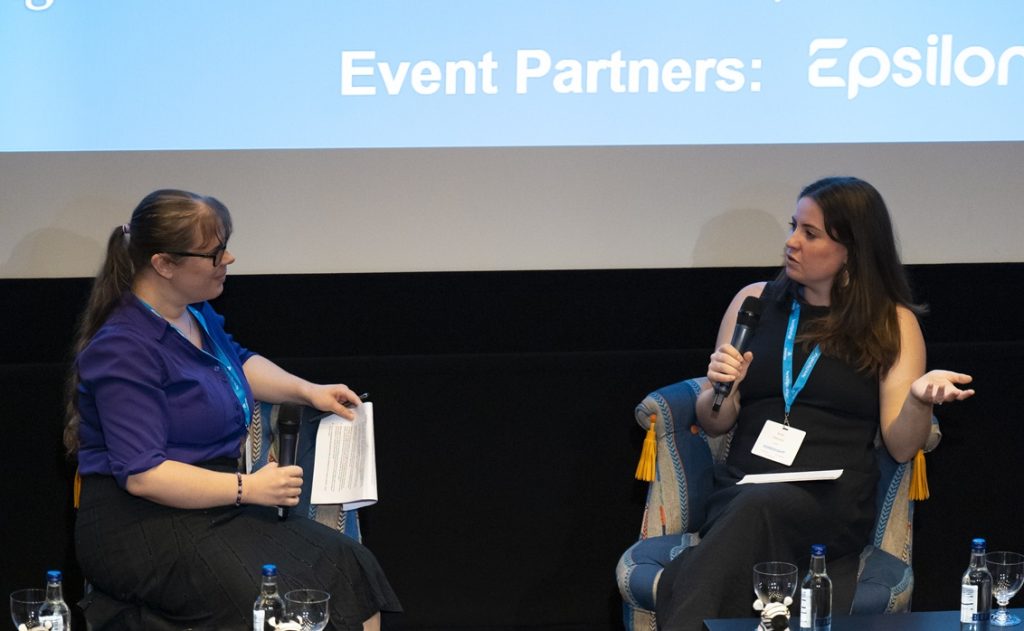
At NDA’s Foresight event, Esme Robinson, VP Platform Solutions & GTM at Epsilon, joined Rebecca Sentance, Editor at Retail Media Age, to discuss the distinction between immediately measurable outcomes and true business value.
Defining outcomes versus value
To understand where advertising measurement must head, Robinson began by distinguishing between an outcome and genuine value.
“When I mean outcome, I’m saying something that can be observed: a click, a transaction, an action, a visit in store, whatever it is,” explained Robinson. “But what I mean by value is the significance of that outcome to a broader business objective.”
While channels like search and social provide observable intent and attention, the rapid expansion of retail media has introduced vast streams of transactional data.
However, as activation channels continue to proliferate, consolidating and measuring the true value of these efforts across broader corporate strategies has become increasingly complex.
Research by Epsilon has highlighted a striking disconnect between marketer investment decisions and changing consumer behaviours during the golden quarter. A survey of 200 marketing decision-makers revealed that 79% were pushing more spend into performance and direct response, with only 8% investing in brand building.
Yet, a simultaneous study of 200 consumers painted a different picture: 63% were deferring purchases and 39% were making fewer high-quality purchases.
Addressing this tension, Robinson said that pouring spend into performance platforms and lower-funnel retargeting poses an existential question for brands.
“Those consumers who aren’t going to purchase maybe in Q4, how are you capturing their attention? How are we actually going to create or save that demand when it comes to getting in front of them at the point where they do want to make that purchase?”, she said.
Upper-funnel, brand-led activity does not have to mean unbacked or unaccountable spend.
“Upper-funnel spend can still be proven to drive towards an important business goal,” Robinson said. “It’s just about having the right data, the right technology, the right partner… to be able to help you connect those dots.”
The cross-channel measurement paradox
During the fireside chat, Sentance outlined the quandary marketers face: “Are we still focusing too much on what is easiest to measure – and are we focusing enough on what drives genuine business growth?”
Robinson highlighted a paradox from Epsilon’s research. While 93% of marketers expressed confidence in proving paid media’s impact on online sales, 55% said that platforms provide too little data to inform cross-channel campaigns.
“How can you be really confident on your paid media’s impact if you don’t feel like you’re getting the right data to be able to do so?” Robinson asked.
To illustrate the importance of taking a holistic cross-channel approach, Robinson cited a campaign for client FatFace, where the objective was to drive incremental reach among new audiences. When users were reached across a combination of channels including Connected TV (CTV) and online video, they were 3.8 times more likely to visit the website and 4.1 times more likely to convert compared to single-channel exposure.
Evaluating channels in isolation can easily lead marketers astray. While cheaper formats like display may appear more cost-effective on paper, assessing performance across an integrated channel mix gives a clearer view of total business impact.
Bridging the gap in retail media
Retail and commerce media have promised to close the loop on ad measurement by connecting exposure directly to sales. Yet, even this sector wrestles with proving true incrementality.
Referencing work with Currys on its off-site retail media network for a major TV brand’s new product launch, Robinson said that combining CTV, online video, and display led to a 46% increase in conversions.
“User behaviour will remain complex,” she reflected. “Retail media is about as good as we can get right now for targeting, measurement, and access to channels.”
To make marketing measurement stand out in the boardroom, marketers must evolve the language they use with executive leadership.
“Are we talking about KPIs, metrics and dashboards or are we also, not getting rid of that language, but complementing it with talk of churn, lifetime value, of these broader things?” asked Robinson. “Our use of language will start to have an impact if we lead the way by using that type of language.”
Concluding the session, Robinson offered a final takeaway for marketing leaders looking to redefine value in their organisations. “Think about the long term; think about value, not just outcome, and realise it’s accessible. It’s possible today.
“Measurement will never be easy, but to do more with what we’ve got is definitely possible.”