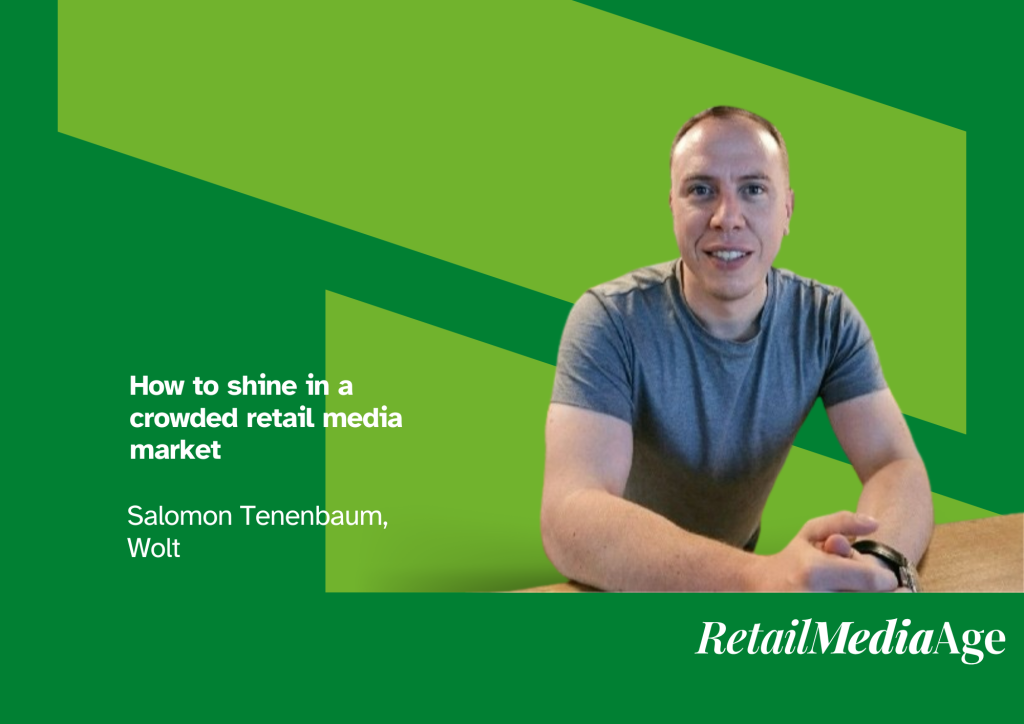
Fragmentation doesn’t mean failure – it’s an invitation to lead
By Salomon Tenenbaum, Global Head of Enterprise Ads at Wolt
Always take the bad news first …
The retail media explosion is transforming advertising – but Amazon and Walmart currently command more than 80% of spend, leaving hundreds of smaller networks competing for the rest. Brand advertisers and agencies are stretched thin, worn out in the face of inconsistent tools – and no single aggregator has emerged to unify it all. Not yet, anyway.
The good news is that the bad news always sounds worse than it is – and here’s the twist. This fragmentation isn’t a dead end – it’s an opportunity.
For retailers with a strategic edge and a clear value proposition, this new era offers an exciting path forward. One built not on scale alone, but on smart differentiation. There is hope, and profit contribution, for those that look closely.
The market is undoubtedly messy – the sheer number of Retail Media Networks (RMNs) launching today is staggering. But they shouldn’t aim to beat Amazon, rather be better for the right brands, in the right moments, and in the right markets.
Technologies like offsite targeting, data clean rooms, and retail media marketplaces are changing the game by extending reach, improving audience targeting, and helping advertisers scale their spend efficiently.
These are still just tools, however. The real winners will be the networks built on strategic clarity that bring meaningful value to brands.
So how can retailers break through the noise?
If you’re building or refining an RMN, there are three key strategic levers to focus on: geographic diversity, mission specificity, and category targeting.
Geographic diversity: Think beyond US borders
Global advertisers don’t just want reach; they want relevant reach. The US may dominate retail media headlines, but global growth lies elsewhere. Many emerging consumer markets remain under-served by the retail media giants, giving local and regional players a powerful advantage to provide the same level of personalisation and value to consumers in these less digitally sophisticated markets.
At Wolt, we’ve leaned into this strategy, focusing on the depth of our market penetration. In the Nordics alone, for example, we serve hundreds of cities, and we are expanding into dynamic, under-served markets like Cyprus, Serbia, and Kazakhstan. These represent real potential to advertisers who need trusted local access in areas with few alternatives.
My pro tip? If you can offer localised retail media in a global framework, brands will line up to partner.
Mission specificity: Own high-intent moments
Not all shoppers behave the same. Their intent varies by moment, and RMNs that cater to specific missions unlock exceptional value.
Delivery commerce is especially powerful, capturing consumers at the end of their purchase journey. Our collaboration with a top global beer brand to dominate the Champions League match moment was a case in point, with the campaign delivering triple-digit sales uplift, double-digit category share increase, and a lasting halo effect across products.
Designing RMNs around when and why consumers buy is key – winning shopper missions is where retail media becomes retail magic.
Category targeting: Know where to win
RMNs can be incredibly efficient in categories where audience targeting matters most – think high-frequency, under-penetrated verticals.
If you attract new parents, whether of humans or their furry equivalents, your network holds premium value for baby brands and pet care. If it’s spirit drinkers, you are the place for alcohol advertisers.
Alcohol retailers often outperform grocery channels when it comes to spirit brands, for example, due to more focused targeting and less category clutter.
Advertisers don’t need to reach everyone – they need to reach your people. Your niche is your strength.
So yes, the RMN landscape is fragmented, but the prizes are there for the taking for those who build meaningful differentiation through one or more of these strategic levers. And, in this way, fragmentation will fuel innovation, creating space for the players bold enough to stand out.
By focusing on your network’s unique strengths – be it geographic reach, shopper mission precision, or category dominance – you can deliver real value to advertisers and real results for your business.
You don’t need to be the biggest RMN. You just need to be the one that works best for your market.
The aggregators may come. The platforms may consolidate. But the RMNs that deliver differentiated, incremental value today will lead the future tomorrow.